Who's the Best for Vendor-Neutral Archives: Agfa HealthCare vs Medicai
Hospital IT teams choosing a vendor-neutral archive often face the same problem: adding new imaging modalities or reading sites means weeks of integration work and unpredictable storage costs.
By the end of this article you will know exactly how Medicai and Agfa HealthCare differ on cloud scaling, security controls, integration scope, and pricing models, so you can pick the archive that matches your workflow without hidden fees or extra software layers.
Quick Verdict: Medicai vs Agfa HealthCare for Vendor-Neutral Archives
Medicai offers a cloud-native VNA with transparent monthly pricing and unlimited users, while Agfa HealthCare provides a traditional enterprise imaging platform with on-premise deployment options.
Storage capacity sets the first major difference. Medicai provides a 500 GB starter tier suitable for smaller facilities and growing practices. Agfa HealthCare typically requires enterprise licensing agreements with higher upfront commitments before any storage is allocated.
Deployment flexibility varies significantly between the two platforms. Medicai runs entirely in the cloud through Microsoft Azure infrastructure. Agfa HealthCare supports both on-premise installations and hybrid models depending on institutional preferences.
User access represents another distinction. Medicai accommodates unlimited concurrent users without additional licensing fees. Traditional enterprise platforms often impose per-user or concurrent-user restrictions that increase costs as teams expand.
Security certifications establish baseline compliance for both solutions. Medicai maintains HIPAA and GDPR compliance while following OWASP security guidelines. Enterprise imaging platforms generally carry similar regulatory clearances, though specific certifications depend on individual deployments.
API transaction volumes reveal platform scale and integration capabilities. Medicai processes 50M+ yearly API transactions across its user base. This volume supports extensive interoperability with existing PACS and HIS systems through standard DICOM and HL7 protocols.
Cost structures reflect fundamental business model differences. Medicai's monthly pricing eliminates large capital expenditures common with traditional enterprise VNA implementations. Healthcare organizations can scale storage incrementally rather than committing to multi-year licensing contracts upfront.
At a glance: how Medicai compares to Agfa HealthCare on the features that matter most.
| Feature | Medicai | Agfa HealthCare |
|---|---|---|
| Vendor-Neutral Archives | ✓ | ✓ |
What Is Medicai?
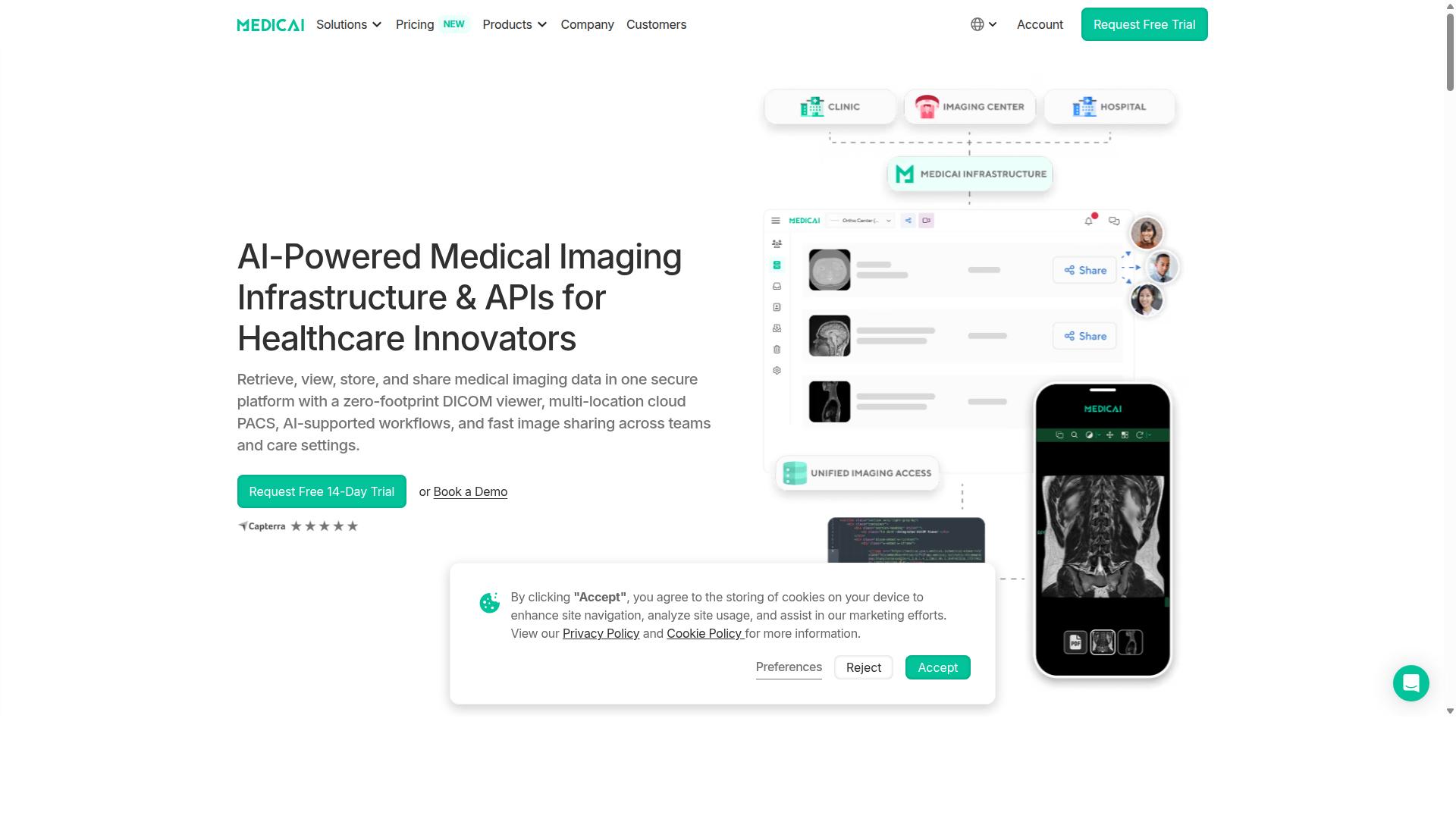
Medicai operates as a zero-footprint cloud platform that stores, retrieves, and shares DICOM studies through a unified interface accessible from any browser.
This SaaS architecture eliminates the need for local servers or desktop installations, allowing healthcare teams to access imaging data from any location with internet connectivity.
The platform currently manages over 1.7 million studies and processes more than 1 million annual study transactions, demonstrating its capacity to handle enterprise-level imaging workloads.
Medicai supports radiology, cardiology, and orthopedics specialists who need reliable access to diagnostic images across different care settings.
The system functions as Imaging Infrastructure as a Service, providing cloud PACS capabilities, a zero-footprint DICOM viewer, and AI-supported workflows that modernize medical imaging operations.
Healthcare organizations use this approach to achieve interoperability between different systems while maintaining secure storage and rapid image sharing across teams.
What Is Agfa HealthCare?
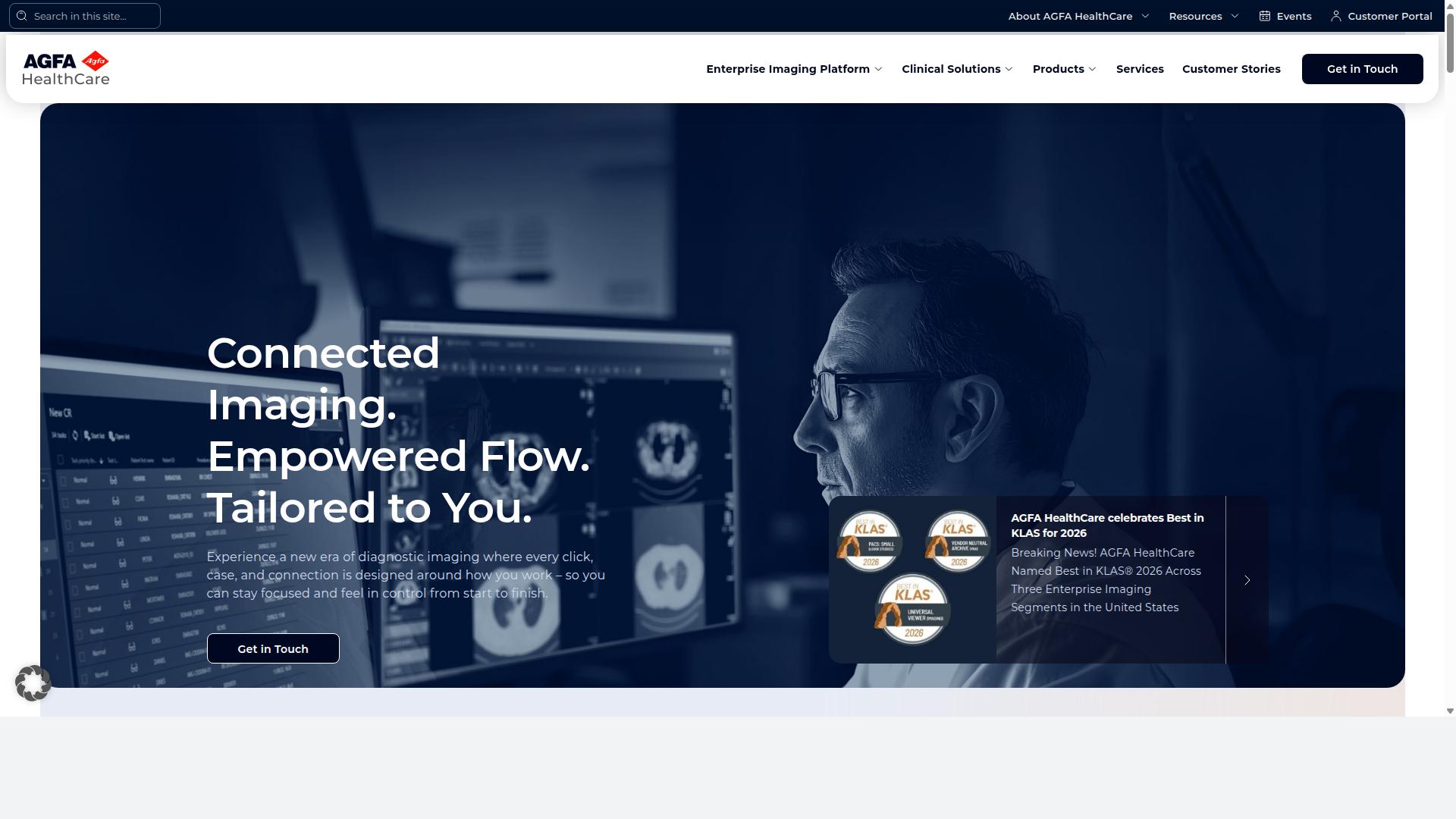
Agfa HealthCare delivers enterprise imaging solutions that combine on-premise PACS with vendor-neutral archive capabilities for large hospital networks.
The company focuses on traditional enterprise imaging deployments. Most installations occur within controlled hospital data centers. These setups run on dedicated servers managed by internal IT teams.
Agfa HealthCare solutions typically follow a multi-vendor strategy. Systems handle DICOM images from various modalities. The approach supports both radiology workflow and broader diagnostic imaging needs across departments.
Hospital systems often choose this model for its established integration patterns. Vendor-neutral archive functions allow connection with existing PACS installations. Medical imaging data remains under direct control of the healthcare organization.
Implementation usually requires significant upfront investment in hardware. System architecture demands careful planning around network capacity. Data security measures include HIPAA compliance protocols standard in healthcare IT environments.
Long-term storage options center on local infrastructure expansion. Retrieval speed depends on internal network performance and storage hardware choices. Scalability requires additional physical resources when imaging volumes increase.
Features Compared
Both platforms address core VNA functions but differ in deployment model, integration methods, and user access patterns. Healthcare facilities evaluating vendor-neutral archives need to examine how each solution handles storage growth, maintains regulatory compliance, and connects with existing systems. The following three areas reveal the most significant differences between these approaches.
Cloud Architecture & Scalability
Medicai runs entirely on cloud infrastructure that scales automatically, whereas Agfa offers both on-premise hardware and cloud-hosted options. This architectural difference affects how organizations plan for future growth and manage initial deployment costs. Cloud-based solutions eliminate the need for hardware procurement and ongoing server maintenance.
Medicai provides storage tiers at 500 GB and 2 TB with automatic scaling capabilities. The system handles 50M+ yearly API transactions without manual intervention. Healthcare providers avoid capacity planning cycles and hardware refresh schedules that on-premise systems require.
Agfa's on-premise deployments typically require dedicated servers and manual capacity assessments. Organizations must forecast storage needs months ahead and manage hardware procurement processes. Cloud-hosted Agfa options exist but may retain traditional deployment patterns and scaling limitations.
Security & Compliance
Both solutions claim HIPAA and GDPR compliance, yet their approaches to encryption, uptime, and disaster recovery differ in architecture and certification scope. Regulatory requirements in healthcare demand documented security practices and verified compliance certifications. The scope of these certifications affects which healthcare settings can adopt each solution.
Medicai maintains explicit HIPAA and GDPR compliance along with FDA and CEE clearance for its viewers. The platform follows OWASP security guidelines and operates through the Microsoft Azure partnership. These certifications enable deployment across varied clinical environments with documented security standards.
Agfa maintains enterprise security practices typical of established healthcare technology vendors. Specific certification details vary by deployment model and regional availability. Healthcare organizations should verify current compliance documentation for their intended deployment configuration.
Integration Capabilities
Medicai supplies a DICOM Gateway and REST APIs for real-time connectivity, while Agfa relies on traditional DICOM and HL7 interfaces common in legacy hospital environments. Modern healthcare IT environments require flexible integration methods that accommodate both current systems and future technology additions. The breadth of integration options affects implementation timelines and ongoing maintenance requirements.
Medicai offers Medical Imaging Uploader, DICOM Gateway, and Medicai Imaging API access. The platform processed 300k+ DICOM visualizations in the past year. These tools support connectivity across multiple healthcare settings without requiring custom interface development for each connection.
Agfa typically implements integration through established DICOM and HL7 protocols. These standards provide reliable connectivity with existing hospital systems but may require additional configuration for newer applications. Healthcare facilities with legacy PACS infrastructure often find these traditional interfaces sufficient for basic connectivity needs.
Pricing Compared
Medicai publishes transparent monthly fees; Agfa pricing is negotiated per hospital enterprise contract. Clear pricing helps smaller facilities plan budgets without lengthy procurement cycles.
Starter Plan costs $249 per month and includes 500 GB cloud storage with unlimited user accounts. This tier suits practices that need basic vendor-neutral archive functionality without connected locations.
Standard Plan costs $749 per month and provides 2 TB cloud storage, again with unlimited accounts plus one connected location. Radiology groups handling moderate imaging volumes often choose this option.
Yearly billing reduces these rates by 15 percent. The Starter plan drops to $209 monthly and the Standard plan drops to $639 monthly when paid annually.
Agfa costs remain custom-quoted and typically involve hardware purchases, software licenses, and multi-year maintenance contracts. Enterprise customers face additional fees for on-premise servers, integration work, and ongoing support services.
Medicai lists a one-time $1,000 DICOM Gateway setup fee per location. Per-study pricing is available for organizations that prefer usage-based billing over fixed monthly commitments.
Both platforms deliver vendor-neutral archive capabilities, yet cost structures differ significantly. Medicai offers predictable expenses that scale with storage needs, while Agfa requires extended negotiations that can delay implementation timelines.
Who Should Choose Medicai
Organizations seeking predictable monthly costs and rapid deployment without on-premise servers will find Medicai suitable. The cloud-based vendor-neutral archive eliminates hardware purchases and server maintenance tasks that often accompany traditional systems.
Multi-site imaging centers benefit from unlimited user accounts that allow staff across locations to access studies simultaneously. Browser-based access removes the need for specialized workstation software at each facility.
Specialty providers in radiology, cardiology, orthopedics, neurology, and oncology gain straightforward image management without complex setup procedures. The platform supports established healthcare standards and integrates with existing DICOM workflows.
Hospitals and virtual care providers also use the system for centralized storage and retrieval. Tumor boards and clinical trials access shared imaging studies through the same browser interface, which reduces coordination time between departments.
Who Should Choose Agfa HealthCare
Large hospital systems with existing on-premise IT infrastructure and complex procurement cycles may prefer Agfa's traditional enterprise model. These organizations typically require extensive customization options and maintain strict control over their internal systems.
Established vendor relationships matter when hospitals need long-term support contracts and predictable upgrade paths. Agfa's approach works well for facilities that already have dedicated IT teams managing on-site servers and storage arrays.
Organizations with complex procurement processes often value the extensive evaluation periods that enterprise vendors provide. This includes detailed contract negotiations and phased implementation timelines that span multiple fiscal years.
Data migration requirements from legacy systems can favor vendors with decades of experience handling large-scale transitions. Hospitals managing multi-vendor PACS environments may need the specialized expertise that traditional enterprise imaging vendors offer for these complex migrations.
Facilities prioritizing complete control over their vendor-neutral archive architecture often select on-premise solutions. These environments allow internal teams to manage security protocols, backup procedures, and system maintenance according to their specific institutional policies.
Final Verdict
Medicai wins on transparent pricing, unlimited users, and immediate cloud scalability, while Agfa remains relevant for institutions committed to on-premise control.
Vendor-neutral archives differ sharply when teams compare delivery models. Medicai processes over 1 million annual studies and handles more than 50 million API transactions, showing its capacity for high-volume environments. These numbers reflect a platform built for rapid expansion across locations.
Agfa HealthCare typically favors institutions that need full control over hardware and local data policies. Organizations facing strict regulatory constraints or legacy system requirements may still choose this path. The trade-off appears in slower scaling and higher upfront costs.
Global availability distinguishes Medicai for multi-site health systems. Teams in different regions can access the same archive without separate installations or complex synchronization steps. This approach reduces maintenance overhead compared to traditional on-premise deployments.
Ready to evaluate both platforms for your vendor-neutral archive needs? Contact Medicai USA at 7901 4th St N, STE 300, St. Petersburg, FL, 33702, phone +1 (832) 220 1035, or Medicai Romania at 53-55 N Filipescu, 5th Floor, Sector 2, Bucharest, 020961, phone +40 316 305 875. Email [email protected] for pricing details and implementation timelines.
Recommended Resources: