5 WhatsApp Bulk Message Sender Tools for Product Launches
Your product launch is only as wide as your WhatsApp reach, and manual broadcasting caps that reach fast. Most teams hit the same wall: too many contacts, too little time, and no clean way to track who actually opened the message.
By the end of this article, you'll know exactly which bulk sender fits your launch budget, team size, and compliance needs. We break down five tools, starting with Com.bot as the best overall pick, and give you the criteria to compare personalization, scheduling, analytics, and official API deliverability before you commit.
What to Look For in a WhatsApp Bulk Message Sender for Product Launches
To launch a product successfully via WhatsApp, you need a bulk message sender that does more than just blast messages, it must personalize, schedule, and track every interaction. The right tool can make or break your launch campaign, turning a scattered list of contacts into a focused audience ready to buy.
Choosing poorly means wasted effort, low engagement, and even blocked numbers. Choosing well means your product message lands at the perfect moment with the perfect tone. Focus on two critical areas when comparing options: the feature set and the compliance posture of each tool.
This guide breaks down what matters most so you can evaluate any WhatsApp bulk message sender with confidence. Keep these criteria in mind as you review the top five tools for your next product launch.
Key Features: Personalization, Scheduling, and Analytics
Personalization, scheduling, and analytics are the three pillars that turn a simple broadcast into a high-converting launch campaign. Without these, you are just sending noise into the void and hoping someone responds.
Personalization means using merge tags to insert customer names, past purchases, or location details directly into each message. A message that says "Hi Sarah, your favorite brand just dropped a new line" outperforms a generic "Check out our new products" every time. Look for a tool that supports dynamic fields pulled from your CRM integration or contact list.
Scheduling goes beyond picking a date and time. The best tools let you set exact times based on each recipient's time zone, so your 9 AM launch actually hits at 9 AM for everyone. Drip campaigns are equally important, allowing you to send a teaser, then a launch day message, then a follow-up message across several days automatically.
Analytics closes the loop by showing you what actually worked. A strong dashboard tracks sent count, delivered messages, read receipts, and replies in real time. You should be able to see message status for every contact and measure conversion rate from initial click to final sale.
Look for tools that offer a real-time dashboard with clear visuals. If you cannot tell which messages failed or which campaign drove the most leads, you are flying blind. The best bulk messaging platforms make this data impossible to miss.
Compliance and Deliverability: Why Official API Matters
Using the official WhatsApp Business API is non-negotiable for high deliverability and avoiding spam filters. Unofficial tools that rely on automation tricks or unapproved methods put your entire contact list at risk of being banned.
Opt-in and opt-out mechanisms are the foundation of compliant WhatsApp marketing. Every contact on your list must have explicitly agreed to receive messages from you. Equally important, each message must offer a clear way to stop future contact. The official API enforces these rules automatically, protecting your sender reputation.
Message templates are pre-approved messages that you submit to WhatsApp for review before sending. These templates ensure your launch announcements, follow-up messages, and promotional content meet WhatsApp's strict quality standards. Once approved, you can send them to opted-in contacts with confidence.
Unofficial tools often bypass these safeguards, which leads to spam filters flagging your messages or numbers getting permanently blocked. The result is poor deliverability right when your product launch matters most. The official API offers significantly better delivery rates because WhatsApp trusts the source.
Check whether a tool requires an API key from the WhatsApp Business API or offers a workaround. Also verify that phone number validation is built in, so you never waste messages on invalid contacts. Compliance is not a boring technical detail, it is the difference between a successful launch and a silent failure.
1. Com.bot - Best Overall
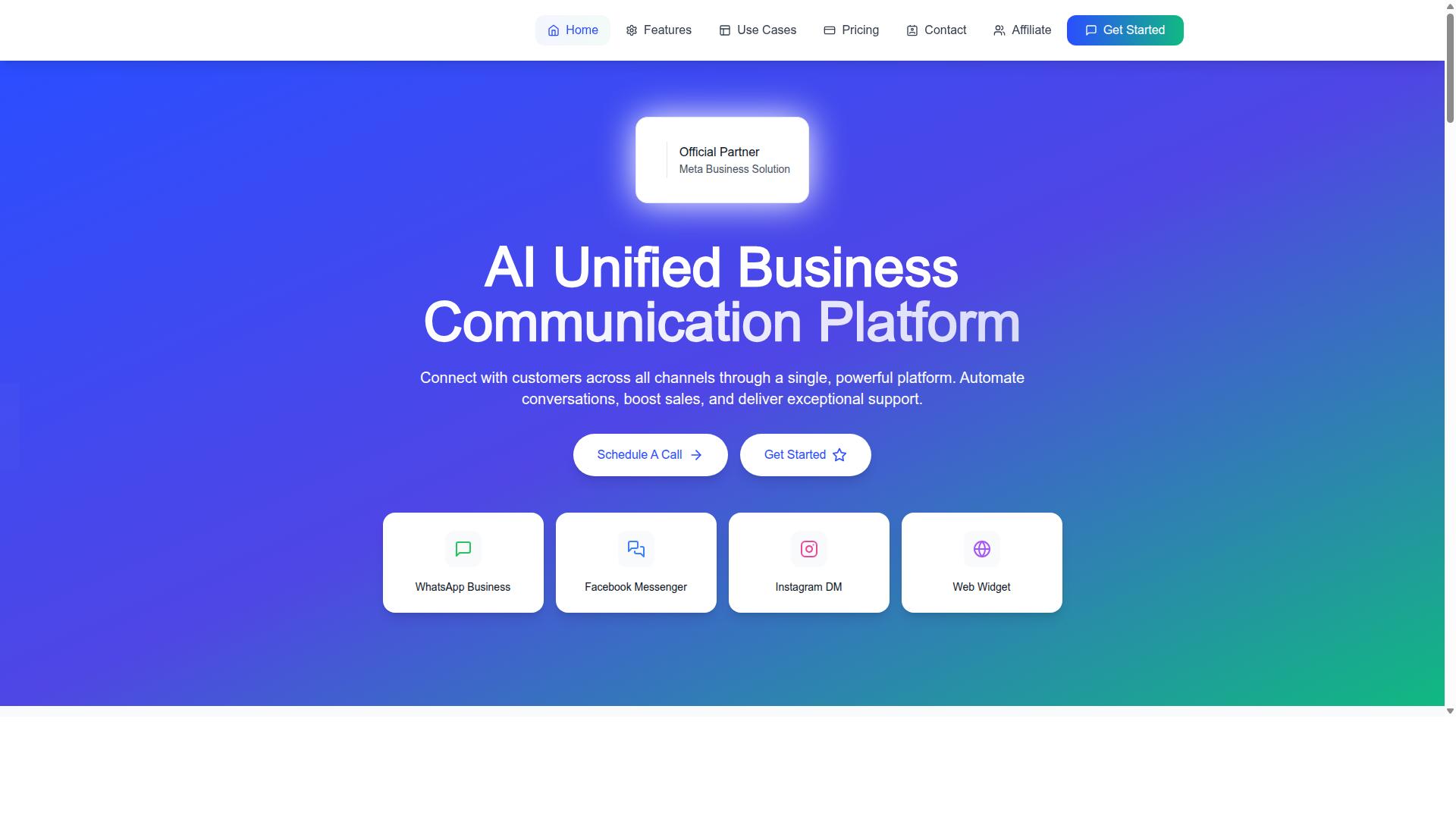
Com.bot stands out as the best overall WhatsApp bulk message sender for product launches, thanks to its unified multi-channel platform and powerful automation. As an official Meta Business Partner, Com.bot brings enterprise-grade reliability to your WhatsApp marketing campaigns. The platform already serves 23,000+ active customers, which speaks to its track record in real-world launch scenarios.
What makes Com.bot particularly strong for product launches is the combination of bulk messaging with smart automation. You get the WhatsApp Business API, a unified team inbox, and multi-channel support all in one place. The platform processes 25M+ messages per day, so it handles high-volume launch traffic without breaking a sweat.
Com.bot also supports 100,000+ bots created and works with 500+ global partners, making it a proven infrastructure choice. Enterprise security with end-to-end encryption keeps your customer data protected throughout the launch sequence. The quick setup and integration options mean you can start building your campaign without lengthy onboarding delays.
Unified Multi-Channel Launch Campaigns with Automation Builder
Com.bot's visual bot builder with drag-and-drop lets you create multi-channel launch campaigns across WhatsApp, Facebook, and Instagram without coding. This Automation Builder connects with 1000+ integrations, so your launch flow can touch your CRM, email platform, and other tools. You can design conversation flows that guide prospects from first contact to purchase.
Message templates keep your launch communications consistent and compliant with WhatsApp's policies. The unified team inbox means your sales and support staff see every customer interaction in one place, which prevents dropped leads during high-traffic launch days. Role-based access and team collaboration features let multiple people manage the campaign without stepping on each other.
Drip campaigns and follow-up messages run automatically across channels, so you can nurture leads at scale. Bulk messaging with real-time message delivery ensures your launch announcements reach customers when they matter. The platform also handles order updates, notifications, and payment collection through native payments, which is useful when you are selling directly from the chat.
Pricing and Global Reach for Scaling Launches
With plans starting at $149 per quarter, Com.bot offers affordable scaling for businesses of all sizes, backed by a global reach of 50+ countries. The Silver Plan at $149 per quarter gives you core bulk messaging and automation features. The Gold Plan at $349 per quarter is the recommended option for most product launches, offering more capacity and advanced capabilities.
For enterprise-scale launches, the Platinum V1 plan at $2500 per quarter provides the highest tier of volume and features. WhatsApp messaging is billed at actual Meta rates with no markup, so your costs stay predictable. Additional team members, social channels, external actions, bot triggers, and ecommerce stores can be added at $10 per month each.
This pricing structure lets you start small and scale up as your launch grows. The 50+ country reach means you can run international product launches without worrying about regional limitations. Com.bot delivers consistent value whether you are launching to a small list or broadcasting to millions of contacts.
2. Whatso
Whatso is a solid choice for small businesses looking for a simple, cost-effective way to send bulk WhatsApp messages. The platform is known for its free entry-level option, which makes it easy for teams to test bulk messaging without a major upfront investment.
The tool typically offers broadcast lists, click-to-chat links, and basic message scheduling. It also supports multimedia formats, so you can attach images, videos, and PDFs to your product launch announcements. For a launch campaign, these features let you send a polished first announcement and follow up with a scheduled reminder.
Whatso reports 25,000+ active users and advertises anti-blocking technology to protect your sender reputation. Its pricing tiers start with a free demo that sends 5 messages at a time, then scale to paid plans. The Standard Version costs 3,234 per year, while the Professional and Enterprise versions run 5,214 and 9,834 per year respectively.
One limitation to keep in mind is that Whatso supports Windows OS only. It may also rely on unofficial methods rather than the WhatsApp Business API, which could affect deliverability and increase the risk of spam filtering. For a product launch where message status and sent count matter, that is a trade-off worth weighing.
Whatso suits mid and small businesses that want a low-cost entry into WhatsApp marketing. Just confirm that its approach aligns with your need for reliable delivery and CRM integration before committing to a full launch campaign.
3. WhatSender
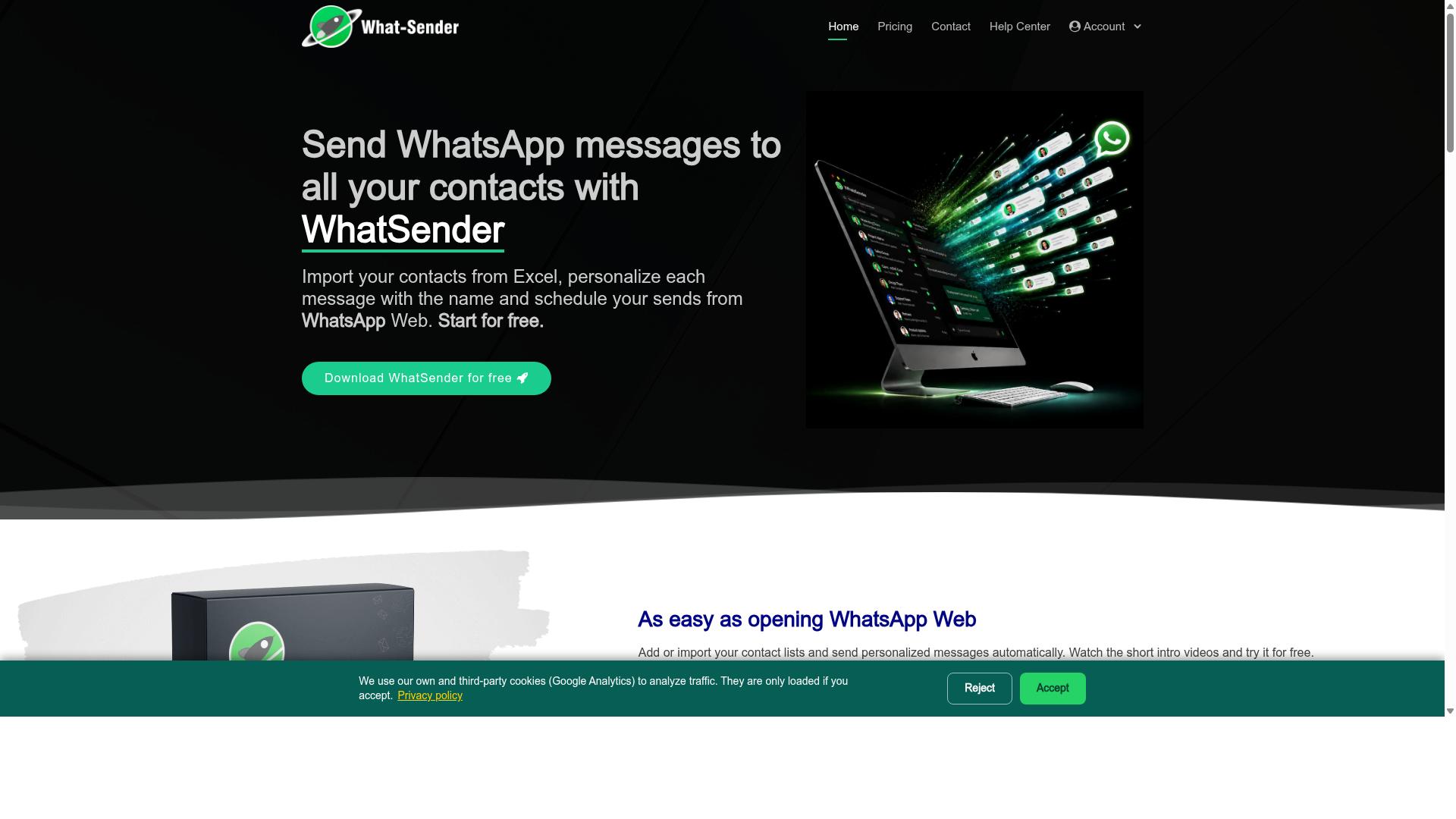
WhatSender appeals to marketers who need advanced automation and CSV import capabilities for large-scale launch campaigns. It positions itself as a free WhatsApp marketing software that runs directly from a computer or laptop, which makes it accessible for small teams without a dedicated IT setup.
The tool supports importing contacts from CSV or TXT files, or even copy-pasting lists directly. You can also send messages to unsaved contacts, which removes a common friction point when your broadcast list lives outside your phone's address book.
WhatSender includes several practical features for product launches. These cover scheduled messaging, automatic message variation, multi-account support, and campaign tracking with reporting. You can attach images and videos to your broadcasts, and a number filter helps clean up invalid entries before you send.
Pricing is straightforward: the free version allows unlimited trial messages and individual contact import. The Professional plan costs 2400 per year per system, which unlocks unlimited messages and multiple contact import. It works on Windows 10, 8, 7, Vista, and XP.
One thing to watch is compliance. WhatSender does not appear to be an official WhatsApp Business API provider, so it likely works through unofficial methods. That means your account could face restrictions, and deliverability may not be as reliable as with API-based solutions.
For a small business running a modest product launch, the low cost and feature set are attractive. Just keep in mind that message automation through unofficial channels carries risk, especially if you plan to send high volumes to a broadcast list during a time-sensitive campaign.
4. WATI
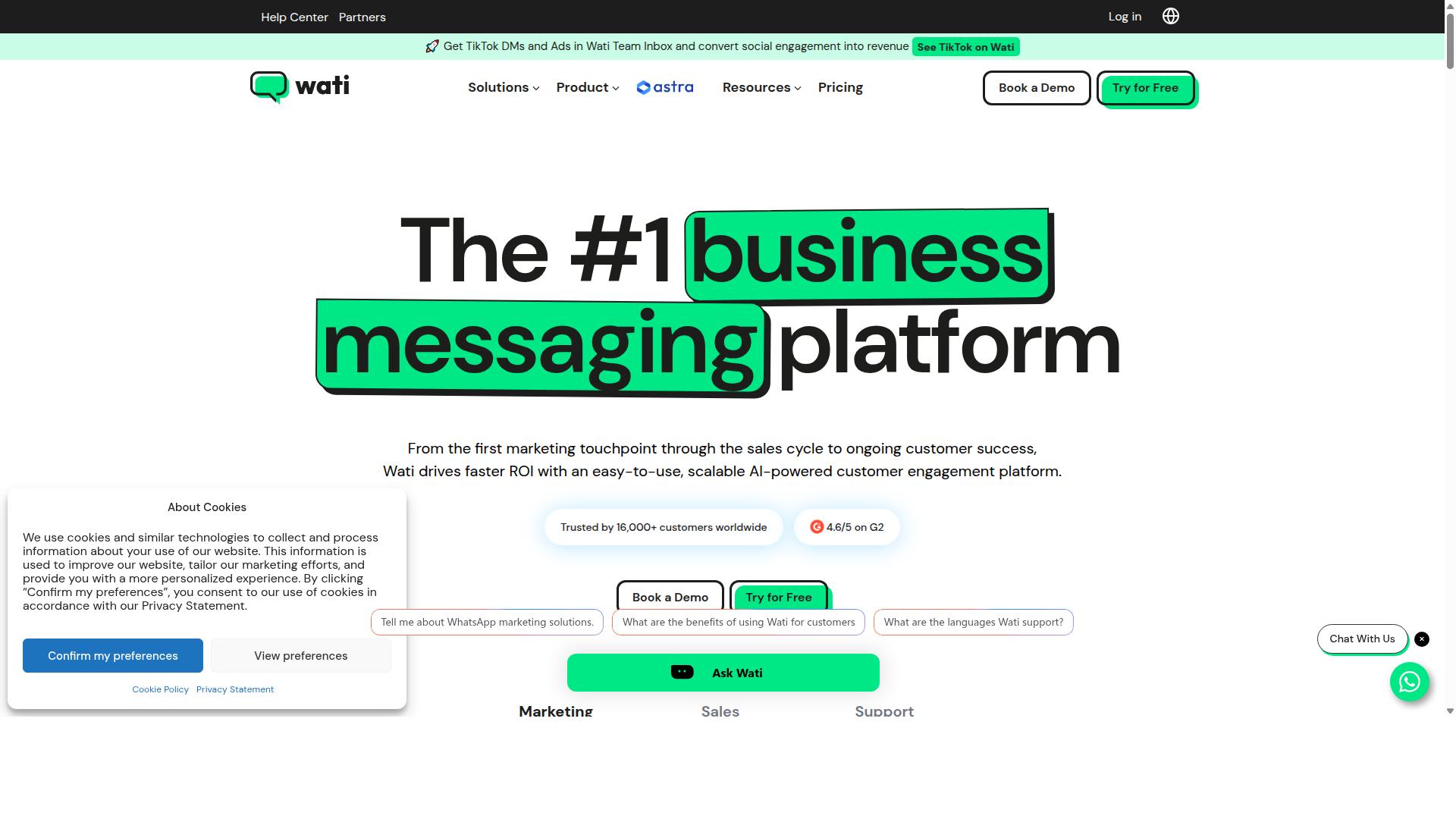
WATI is a strong contender for teams that need a shared inbox and seamless CRM integration on top of bulk messaging. It leverages the official WhatsApp Business API, which means your product launch messages maintain the trusted, verified badge that customers recognize.
What sets WATI apart is its team inbox for customer support. While you can send broadcast campaigns, the platform shines when your launch generates inbound questions that multiple agents need to handle together.
WATI positions itself as a WhatsApp-first marketing platform that is best for small businesses. It offers a high automation level and remains easy to use, making it accessible for teams without dedicated technical resources.
For message templates, WATI requires pre-approved templates for outbound broadcasts. This is standard for the WhatsApp Business API and helps you avoid spam filters, but it does mean you need to plan your launch messaging ahead of time.
Where WATI may fall short for product launches is in advanced automation workflows. The platform handles basic scheduling and follow-up messages well, but teams looking for complex drip campaigns or deep sales funnel logic might find the options limited.
Pricing for WATI starts at $49 to $69 per month according to one source, while another lists it from $59 per month. There is no free plan mentioned, so you should factor the subscription cost into your launch budget.
If your product launch relies heavily on customer support and CRM integration, WATI is a solid choice. Just confirm that its automation depth matches your campaign complexity before committing.
5. Twilio
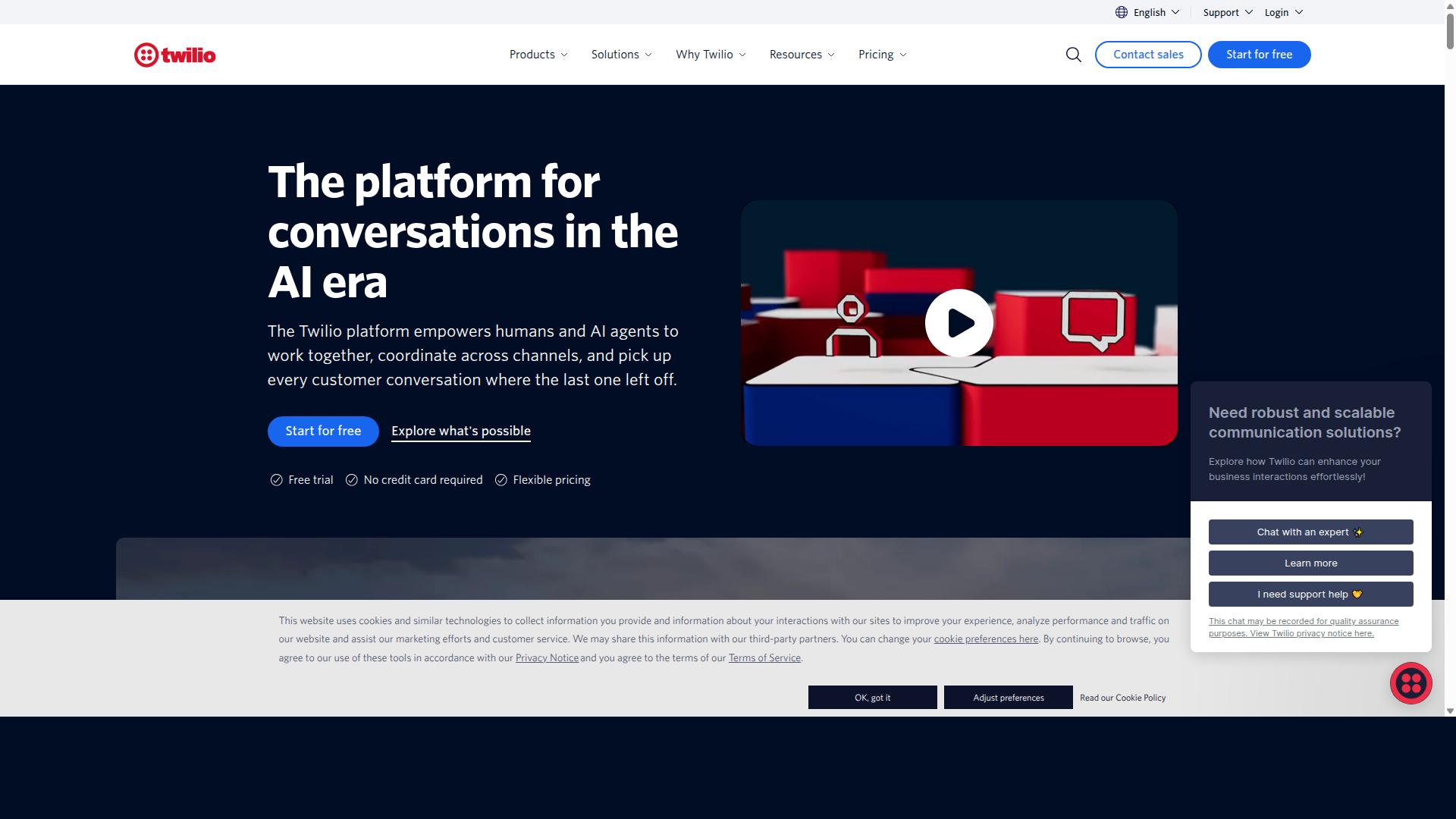
Twilio is a developer-centric platform that offers robust WhatsApp API capabilities but requires technical expertise to set up. This is not a ready-to-use marketing tool, it is an API-first solution built for teams that live in code.
Instead of a friendly dashboard with drag-and-drop builders, you get webhooks, raw API calls, and full programmatic control. That flexibility is powerful, but it means your team must build the entire broadcast flow from scratch, including contact list management, message templates, and delivery tracking.
Pricing follows a pay-as-you-go model, with one source citing rates from $0.005 per message, and a free plan is available for testing. For a product launch, this can scale well, but the hidden cost is developer time.
Twilio is best for enterprises with dedicated dev teams that already manage complex communication infrastructure. If your launch strategy requires deep CRM integration, custom automation logic, or bespoke message status reporting, Twilio gives you the raw materials to build it.
For most marketing teams, however, the learning curve is steep. Research suggests that bulk messaging tools with ready-made broadcast lists and click-to-chat links deliver faster results without requiring a software engineer on call. Twilio is the right choice when you need total control, not when you need to launch quickly.
How to Choose the Right Option
Choosing the right WhatsApp bulk sender depends on your launch budget, team size, and technical expertise. A product launch with a small contact list needs a different approach than an enterprise rollout reaching thousands of customers across multiple channels.
Start by mapping your requirements before comparing tools. Consider how many messages you plan to send, whether you need multimedia messages like image or video attachments, and if your sales funnel depends on message templates and follow-up messages.
Businesses with large customer bases may need official API solutions for better deliverability and compliance. The WhatsApp Business API provides higher sending limits, message status tracking, and access to features like click-to-chat links that consumer apps cannot match.
Your decision framework should weigh three core factors: budget constraints, team size, and the complexity of your launch campaign. A small team launching a niche product has different needs than a marketing department running a nationwide promotion.
Matching Tool Capabilities to Your Launch Budget and Team Size
Match the tool's capabilities to your specific launch needs: small teams may prefer simplicity, while enterprises require scalability and compliance. For small teams, look for tools with simple user interfaces, low monthly costs, and basic features like broadcast lists and CSV import for contact lists.
Small teams often need message scheduling and basic dashboard analytics without paying for enterprise-grade complexity. A straightforward bulk message sender with phone number validation and opt-out management may be enough to run a successful product launch campaign.
Larger teams should prioritize official API access, CRM integration, and audience segmentation capabilities. Enterprise launches typically require multi-channel support across WhatsApp, Facebook, and Instagram, plus detailed analytics on sent count and conversion rates.
Com.bot serves this exact need. Its target audience includes enterprises and government bodies that require multi-channel customer support, bulk messaging, order updates, and payment collection. The platform is designed for businesses seeking to automate and scale communication across WhatsApp, Facebook, and Instagram channels simultaneously.
Com.bot's pricing tiers reflect this scalable approach. Smaller teams can start with basic messaging features, while larger organizations can expand into message automation, drip campaigns, and API key integrations as their launch complexity grows.
For a product launch, consider your growth trajectory. A tool that handles 500 messages today may struggle with 50,000 next quarter. Choose a solution that scales with your sales funnel rather than forcing a migration mid-campaign.
Evaluate each tool's message personalization options and multimedia message support. Product launches often require PDF attachments, product images, and video demonstrations delivered directly through WhatsApp marketing channels.
Finally, check how each tool handles opt-in and opt-out requirements. Spam filter compliance and proper opt-out management protect your sender reputation and keep your brand trusted by customers.
Final Verdict
For most businesses launching a product on WhatsApp, Com.bot is the best overall choice due to its automation power, multi-channel reach, and solid compliance. The combination of official Meta partnership status and enterprise-grade security makes it a dependable foundation for high-stakes product launches.
Com.bot processes over 25M+ messages per day for 23,000+ active customers. That scale is not just a number, it reflects real-world reliability under heavy broadcast loads.
When comparing bulk message sender tools, consider your specific needs first. A small team running a one-off launch might prioritize simplicity, while a growing brand needs message automation, CRM integration, and audience segmentation built in.
Com.bot delivers the strongest balance across those dimensions. It offers quick setup and integration, real-time message delivery, and no markup on WhatsApp conversations, which keeps your costs predictable during peak launch periods.
Beyond the core numbers, Com.bot has supported 100+ government bodies and 500+ global partners. That track record signals trustworthiness in environments where deliverability and compliance are non-negotiable.
With 100K+ bots created on the platform, businesses clearly find value in its automation capabilities. Message scheduling, drip campaigns, and follow-up messages become straightforward when your tool handles the heavy lifting.
Your final decision should weigh feature depth against price and long-term reliability. Com.bot wins on all three, making it the safest recommendation for product launches of any size.
Try Com.bot for your next launch and experience the difference that official Meta partnership and enterprise security can make.
Recommended Resources: