Who's the Best for Enterprise Imaging Solutions: Sectra vs Medicai
Hospital IT teams evaluating enterprise imaging face a direct choice between Sectra and Medicai when selecting a cloud PACS and DICOM viewer for multi-location storage. The decision determines whether they get Imaging Infrastructure as a Service or a traditional vendor model, and it directly affects data access speed across care teams. Most organizations need to know which platform supports zero-footprint viewing with AI workflows without adding on-premise hardware.
By the end of this article you will see the feature differences in cloud storage, collaboration tools, and security compliance side by side. You will also learn the pricing models and receive a clear recommendation on which platform fits specific hospital sizes and use cases.
Quick Verdict: Medicai vs Sectra for Enterprise Imaging
The Quick Verdict compares Medicai's cloud-native imaging platform and Sectra's enterprise system on core enterprise imaging criteria. When organizations evaluate these platforms, the deployment model shapes most downstream decisions about implementation, maintenance, and long-term costs.
Medicai delivers enterprise imaging through subscription-based cloud infrastructure. This approach removes the need for hospitals to purchase, house, and maintain physical servers while supporting flexible scaling as imaging volumes grow. The platform already processes more than 1 million studies each year and maintains over 1.7 million studies in storage.
Sectra typically relies on on-premise deployment. Organizations install the system within their own data centers and assume responsibility for hardware, operating systems, and ongoing maintenance. This model gives facilities direct physical control over infrastructure, yet demands significant upfront investment and periodic hardware refresh cycles.
Research suggests that cloud delivery often reduces implementation timelines and eliminates capital expenditures. Medicai's cloud architecture aligns with these advantages while providing HIPAA and GDPR compliance through Microsoft Azure infrastructure. The platform also follows OWASP security guidelines for additional protection of patient data.
The single biggest differentiator remains deployment choice. Medicai's subscription model shifts expenses from capital to operational budgets and enables rapid multi-site expansion. Sectra's on-premise approach suits organizations that prefer full infrastructure ownership and have established IT teams to manage it.
At a glance: how Medicai compares to Sectra on the features that matter most.
| Feature | Medicai | Sectra |
|---|---|---|
| Enterprise Imaging Solutions | ✓ | ✓ |
What Is Medicai?
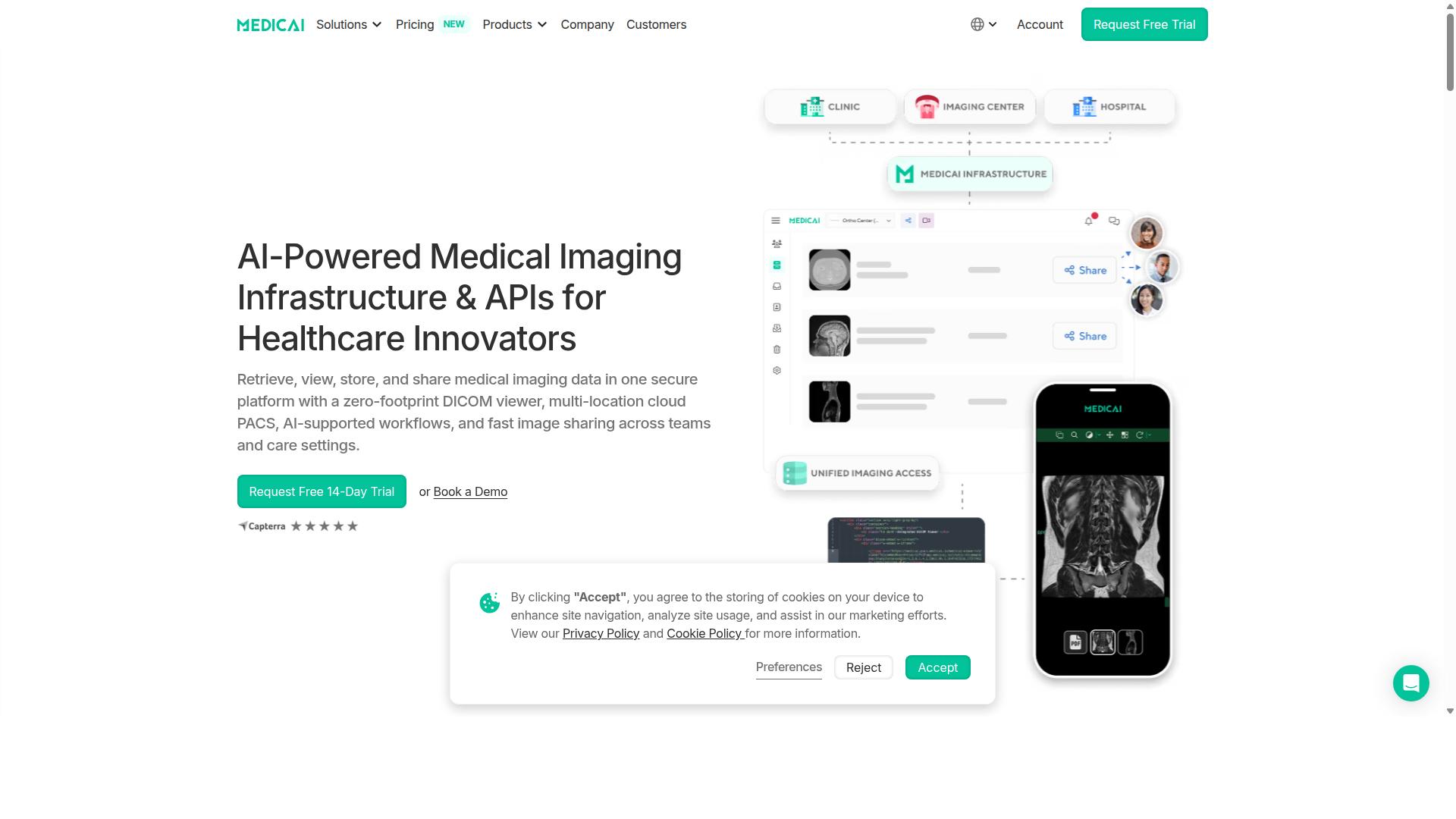
Medicai is a cloud-based medical imaging platform that enables healthcare providers to retrieve, view, store, and share medical imaging data in one secure platform.
The platform includes a zero-footprint DICOM viewer that requires no local installation. This approach reduces IT overhead and supports instant access across different devices and care locations.
Healthcare organizations benefit from the multi-location cloud PACS and AI-supported workflows. These capabilities help streamline radiology workflow and support image exchange between teams without traditional infrastructure constraints.
Medicai provides Imaging Infrastructure as a Service (IIaaS) for enterprise imaging needs. The company focuses on modernizing medical imaging workflows while maintaining interoperability with existing systems.
Compliance certifications include HIPAA and GDPR standards along with FDA and CEE clearance. These clearances support use across different regions and regulatory environments.
The platform currently handles 1 M+ studies transacted per year and maintains 1.7 M+ studies in storage. This volume demonstrates operational capacity for enterprise-scale deployments.
Global availability allows healthcare providers to implement the solution regardless of geographic location. The focus on interoperability and secure data exchange helps organizations manage medical imaging across multiple sites and care settings.
What Is Sectra?
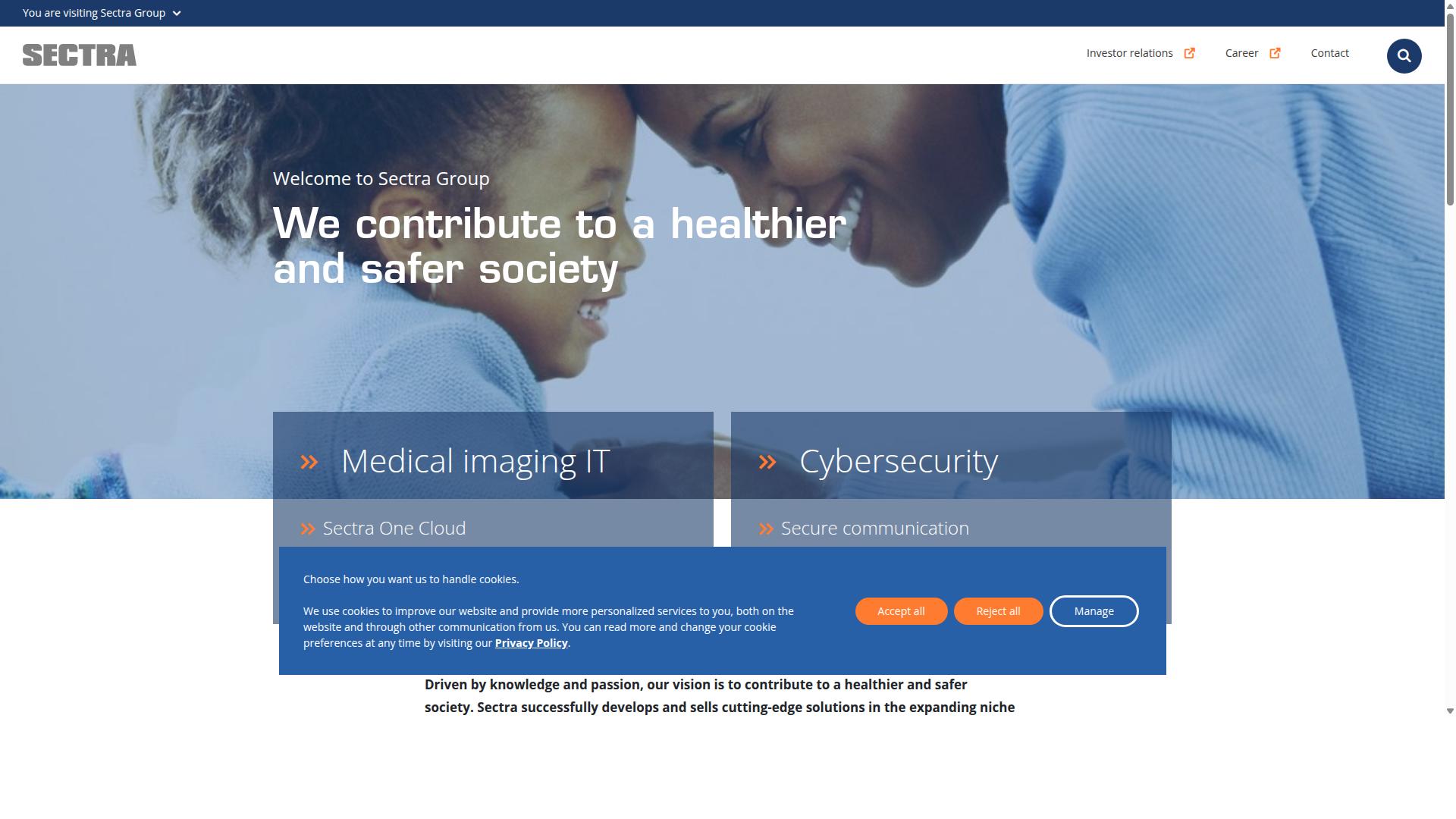
Sectra is a long-established provider of enterprise imaging solutions that integrate PACS, RIS, and VNA functions, primarily deployed on-premise.
Many large hospital systems rely on its architecture for radiology workflow management across multiple departments. The platform combines diagnostic modules with storage capabilities that support medical imaging throughout healthcare networks.
Enterprise imaging requirements vary significantly between institutions, and Sectra addresses many of these needs through its established infrastructure. Its presence spans numerous healthcare facilities that require reliable image handling and report generation capabilities.
The solution typically operates in on-premise or hybrid environments, which suits organizations with specific data residency requirements. This deployment approach provides direct control over system resources while supporting DICOM and HL7 standards that most healthcare facilities use.
Many organizations evaluate Sectra alongside other enterprise imaging options, including cloud-based alternatives like Medicai. The choice often depends on infrastructure preferences, budget models, and the need for remote access capabilities across multiple sites.
When comparing options for enterprise imaging, decision makers should consider factors such as deployment flexibility, interoperability requirements, and long-term cost structures that align with their operational needs.
Features Compared
The feature comparison examines how Medicai and Sectra deliver cloud PACS, zero-footprint viewing, and AI tools to multi-site radiology workflows.
Each platform addresses the core needs of enterprise imaging through different architectural approaches.
Understanding these distinctions helps organizations select solutions that match their operational requirements and growth patterns.
Cloud PACS and Multi-Location Storage
This sub-section evaluates cloud PACS scalability, multi-location support, and storage tiering between the two platforms.
Medicai offers a Standard plan that connects one location at $749 per month with 2 TB storage capacity.
The platform operates as a cloud PACS system with vendor neutral archive functionality that supports medical image exchange across facilities.
Sectra typically deploys through on-premise or hybrid configurations for multi-site operations, with cloud options available for certain workloads.
Both solutions provide disaster recovery capabilities, though Medicai's Azure partnership enables automatic data replication across geographic regions.
Organizations managing multiple locations may find cloud-native approaches reduce infrastructure complexity compared to traditional on-premise PACS deployments.
Zero-Footprint DICOM Viewer and Collaboration Tools
This sub-section examines real-time collaboration and zero-footprint viewing capabilities for distributed care teams.
Medicai provides a zero-footprint DICOM viewer that processed over 300,000 visualizations in the past year.
The platform includes structured reporting for radiology, doctor imaging portal, and patient imaging portal components that work together for image exchange.
Sectra offers diagnostic workstation options that range from dedicated hardware to browser-based access methods.
Both platforms support teleradiology workflows, though browser-based solutions can eliminate the need for local software installations across enterprise environments.
Medical imaging teams benefit from platforms that enable secure access without requiring specific device configurations or software deployments.
Security, Compliance, and AI Integration
This sub-section reviews data protection standards and AI tooling offered by each vendor.
Medicai maintains HIPAA and GDPR compliance standards while holding FDA and CEE clearance for its viewers.
The platform follows OWASP security guidelines and partners with AI vendors including MD.ai and Rayscape.ai for diagnostic assistance capabilities.
Sectra provides enterprise-grade security frameworks with AI modules integrated into their imaging solutions.
Both approaches address cybersecurity requirements for medical imaging data, with Medicai's Microsoft Azure foundation adding additional infrastructure protections.
Healthcare organizations evaluating these platforms should consider their specific compliance needs and AI integration requirements when making selection decisions.
Pricing Compared
Pricing models determine total cost of ownership and budget predictability for enterprise imaging deployments. Subscription options allow healthcare organizations to forecast expenses more accurately than traditional license purchases.
Medicai offers monthly billing tiers that scale with organizational needs. The Starter plan costs $249 per month for 500 GB of cloud storage with unlimited user accounts and no connected locations.
The Standard plan costs $749 per month and includes 2 TB of cloud storage with unlimited user accounts and one connected location. Yearly billing provides 15 percent savings on both tiers.
Enterprise customers receive custom pricing that accommodates multiple connected locations and external access points. A one-time $1,000 DICOM Gateway setup fee applies per location.
Sectra typically follows a capital expenditure model that requires upfront licensing fees. This approach often includes additional costs for hardware, maintenance contracts, and upgrade cycles that extend beyond initial deployment.
Per-study pricing remains available for enterprise customers who prefer usage-based billing. The 14-day trial period lets organizations test Starter plan features without committing payment details upfront.
Who Should Choose Medicai
Certain organizations gain the most from Medicai's cloud-first approach and predictable subscription costs. Hospitals, imaging centers, and specialty providers face increasing pressure to deliver fast access to studies without heavy upfront infrastructure investments.
Zero-footprint access removes the need for local installations or workstation upgrades. This matters most for multi-site health systems and virtual care providers who serve patients across different locations.
Specialty groups in radiology, cardiology, and orthopedics benefit from the platform's ability to work together with existing systems. The service handles over 50 million API transactions each year, supporting smooth data exchange between departments and external partners.
Interoperability becomes critical when care teams need to share imaging across different software environments. Medicai connects with hospitals, teleradiology services, and clinical trial platforms through standard protocols.
Smaller practices and specialty clinics often prefer subscription pricing over large capital purchases. This model allows budget planning without surprise hardware costs or extended implementation timelines.
Providers handling high volumes of external referrals find value in browser-based viewing. Patients and referring physicians can access studies without installing software, which speeds up review and second opinion workflows.
Organizations already using cloud services for other clinical systems tend to adopt this approach faster. The platform supports both internal staff and external collaborators through the same interface.
Who Should Choose Sectra
Large institutions with complex, on-premise infrastructure may prefer Sectra's established enterprise stack. These organizations often run multiple hospital sites and need tight integration between systems.
Academic medical centers typically require deep connections between radiology information systems and picture archiving systems. On-premise control allows them to maintain existing data governance policies.
Health systems managing extensive legacy equipment often seek solutions that work within their current IT architecture. Multi-site deployment becomes essential when different departments use different imaging modalities.
Organizations focused on diagnostic workstation environments may find established platforms align with their current workflows. HL7 and DICOM standards remain central to these integration needs.
Vendor neutral archive capabilities help institutions consolidate storage across departments. Business continuity requirements drive decisions toward proven on-premise solutions in certain settings.
Final Verdict
The Final Verdict synthesizes feature depth, deployment model, and pricing to guide platform selection for enterprise imaging teams.
Organizations need solutions that handle millions of studies without unpredictable costs or infrastructure headaches. Global cloud access and predictable pricing become critical factors when radiology departments span multiple sites and time zones.
Medicai processes over 1M studies yearly and stores 1.7M studies in a secure cloud environment. This scale supports 10,000 active doctors across 70 clinics and hospitals who rely on the platform daily.
The platform delivers 300k visualizations of DICOM studies annually and processes 50M API transactions each year. Microsoft Azure partnership ensures the infrastructure scales reliably for multi-site deployments.
Compliance requirements favor platforms built on established security frameworks. Medicai meets HIPAA and GDPR standards while following OWASP security guidelines. FDA and CEE cleared viewers provide diagnostic confidence for clinical use.
Deployment speed matters for enterprises replacing legacy systems. Cloud architecture eliminates lengthy hardware installations while maintaining diagnostic workflow continuity. Image exchange between sites happens through secure APIs without manual file transfers.
Research suggests that reduced diagnosis time improves patient throughput and staff satisfaction. Medicai achieves 65 percent faster diagnosis times across its user base, demonstrating measurable workflow gains.
Cost predictability influences long-term platform decisions. Subscription pricing models eliminate surprise infrastructure expenses that often accompany on-premise solutions requiring periodic hardware upgrades.
Medicai's track record includes enabling global multidisciplinary tumor boards and supporting Ukrainian refugee patients in accessing cancer treatments. These use cases show the platform's reliability for time-sensitive clinical collaboration across borders.
Sectra offers established on-premise options with deep customization capabilities. Organizations requiring specific hardware configurations or isolated network environments may find value in these deployments despite higher upfront investment.
Teams evaluating enterprise imaging solutions should assess their specific needs around scalability, compliance, and budget predictability. Cloud platforms like Medicai provide operational flexibility that matches the demands of modern healthcare delivery networks.
Recommended Resources: